Beijing University of Aeronautics and Astronautics is the tenth stop of the 'Super Equipment' shooting tour. On November 17, Mr. Wang Huaming, an academician of the Chinese Academy of Engineering, an expert in metal laser additive manufacturing technology, a professor at Beihang University, and the director of the National Engineering Laboratory for Additive Manufacturing of Large Metal Components, received an interview with Director General Han Jing.
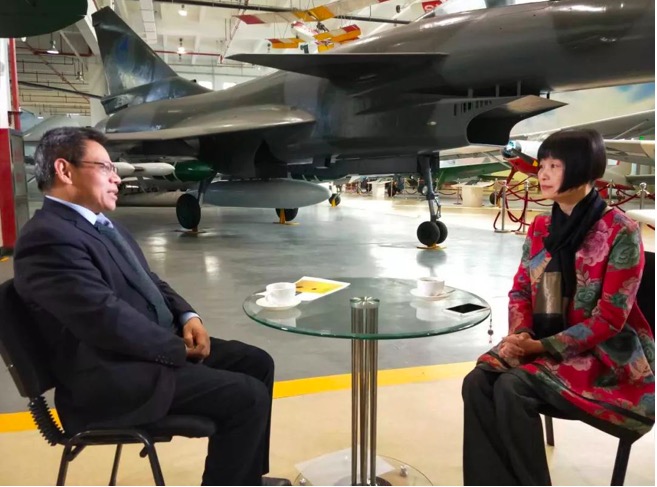
Q: Hello, Academician Wang! Engaged in 3D printing technology for many years, you and the team have made remarkable achievements. So, how did you form an indissoluble bond with 3D printing?
A: What I learned in college was foundry, the method of forming and manufacturing metal parts. Entering the field of 3D printing is actually quite accidental. In 1989, my doctoral student graduated and went to the Institute of Metal Research of the Chinese Academy of Sciences as a postdoctoral fellow to study the manufacturing technology of aeroengine turbine blades. At that time, I used the laser surface melting method to repair the engine blades. It was found that the repaired blades had better performance than the original ones. Because laser melting, the accumulated material will reach a very high temperature in an instant, and then it will be cooled in an instant, changing from liquid to solid. In this way, the crystals inside the metal will become very fine, the chemical composition is more uniform, and the performance of the part is naturally better.
At that time, I thought that if the laser melting technology was used to add a layer of metal material, the performance of the manufactured blade would be improved qualitatively compared with the blade manufactured by traditional methods. But at the time, I hadn't thought of 3D printing. After finishing my Ph.D., I went to Germany as a Humboldt Scholar of the Humboldt Foundation of Germany to study laser surface engineering. If a part needs to be wear-resistant, I will use laser fusion technology to print a special layer of wear-resistant material on its surface, and this part will become very wear-resistant. This is laser surface engineering. Learning casting is mainly to study the crystallization and growth of metals, that is, the theory of solidification. Later, when I did metal 3D printing, I just changed a method, and the foundation was still the original foundation.
Q: This is an interesting example. The basic theory of casting learned in the early years has laid a solid foundation for you in the future of metal 3D printing. Then at a certain moment, you suddenly find that you can create something in a completely new way. At that time, this may just be a flash in the eye, but later, it has changed for a lifetime.
A: Right. There is another factor that I want to relate to demand. It is very difficult to manufacture high-end equipment such as airplanes and aero engines and some large-scale key structural parts by traditional methods, and the cost is huge. Just like some things are approaching the 'ceiling', if you want to further improve and break through, you may pay a great price, but the gain is very small. So sometimes, with a different approach, everything may become very simple. I think this may be the reason for my idea of using 3D printing technology to manufacture large metal components.
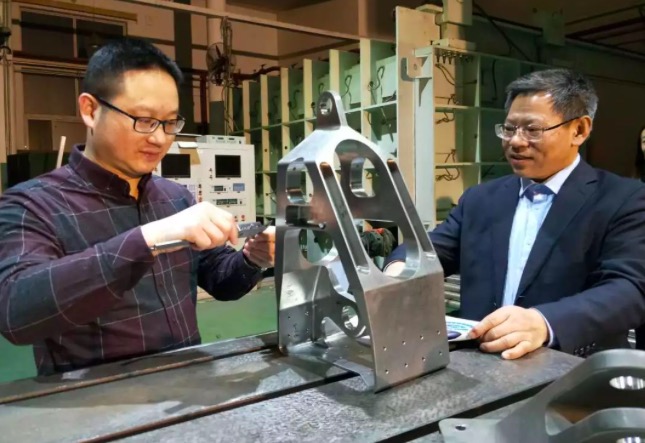
Q: In fact, the development of things has a similar pattern. Just like the development of art, Western classical painting reached the second half of the nineteenth century, and encountered a 'ceiling' similar to what you said. It is very difficult to break through and you have to seek Reaction to and subversion of tradition, so modernist paintings like Impressionism, Fauvism, etc. came up. The development law of industrial science and technology is the same, and there is also a process of breaking through the 'ceiling'. So what is the biggest advantage of 3D printing technology compared to traditional manufacturing technology?
A: Let me focus on metal 3D printing. Its biggest advantage is its performance. With the advancement of technology, people have higher and higher requirements for equipment, and the chemical composition of metal materials is becoming more and more complex, which puts higher requirements on the performance of metals. The traditional metal part forming method is to melt various alloy elements into a liquid alloy through a furnace, then cast it into a solid ingot, and then forge it into a part blank.
The biggest problem with this method is the process of changing from liquid to solid. Because some alloy elements are very active, some have high melting points, and some have impurities in them, so smelting should use vacuum induction smelting furnace, vacuum arc smelting furnace, vacuum electroslag smelting furnace to ensure that the chemical composition of the smelted liquid metal is Even and clean. Then, the liquid metal is cast into the ingot, and it is cold for many days. Changing from liquid to solid is a crystallization process. Liquid metal cools slowly, the crystals crystallized are very coarse, the chemical composition is not uniform, and it will segregate. And from liquid to solid will shrink, like a hollow radish in the middle, such casting performance is not good. The only remedy is to take forging again, compact the hollow radish through forging, and finely crystal to ensure its performance.
Now the whole world knows that the solution to this problem is that the liquid turns into a solid to be cooled faster, that is, it solidifies quickly. This is not only the forefront of the metal materials discipline, but also the forefront of condensed matter physics. In order to solve this problem, we smelted two tons of metal liquid, and used supersonic airflow to spray the liquid into atomized droplets like drizzle, small droplets of tens of microns, under the action of high-speed cooling airflow, small The droplets immediately solidified into a solid, and the chemical composition was stable and the tissue was very fine. Collect these powders, compact them first, and then heat them to diffuse and solidify them together. The turbine disk of an aero engine does this.
With traditional methods, for example, if you want to add oil to the water, you cannot add it. For another example, if you want to add tungsten to iron, the melting point of tungsten is more than 3,000 degrees, and the melting point of iron is only more than one thousand degrees. Tungsten is much heavier than iron. If you add tungsten to iron, it will If it sinks to the bottom, it won't melt. This is the problem. But for the laser, no matter how high your melting point is, the laser can melt any material, and let the melted liquid crystallize at a cooling rate of one million degrees per second or higher to achieve rapid solidification. The crystal structure crystallized in this way is very fine, the chemical composition is very uniform, and the performance is very good.
3D printing technology can not only directly manufacture arbitrarily complex metal components, but also control the crystal size and crystal growth direction. If the growth performance in this direction is good, then I will grow in this direction. It can also control the chemical composition of parts according to the requirements of different parts. For example, this part of the part needs high temperature resistance, then I will use high temperature resistant material to print this part; that part of the part needs corrosion resistance, then I will use corrosion resistant material to print that part. This is one of the greatest advantages of metal 3D printing, and tailor-made special performances for different parts of the parts.
Q: It is generally believed that the advantage of 3D printing technology is to save time and manufacturing costs, and the biggest advantage you just said is that the metal material instantly melts and solidifies at high temperature, so that the internal structure of the parts is more delicate and dense, and the performance better.
A: Yes, shortened manufacturing cycle and greatly reduced costs are of course obvious advantages of 3D printing. To manufacture large key metal components using traditional techniques, it is necessary to open molds, heavy forging presses, and forging. Opening a set of molds may require millions or even tens of millions. It takes several months to build a 10,000-ton forging press. It may be hundreds of millions, and more than 90% of the parts blanks that are forged easily may be cut and processed, the material is wasted, the manufacturing cycle is very long, and the cost is of course very high. Now through 3D printing, there is no need to open the mold, no forging and cutting, and of course no large-scale industrial mother machine. The printed parts are basically close to the final part shape, saving material, labor and time.
Q: You once said that watching your 3D printed work grow like a small tree, millimeter by millimeter, is a very wonderful process. Can we share your feelings?
A: During the 3D printing process, you can see that the parts grow taller one by one. It feels really beautiful, but this is because printing large metal parts is too technically difficult. Because 3D printing is melted and solidified layer by layer, each time a layer is deposited upward, there may be some places that are not fused together between layers. This defect is very fatal to the performance of the parts. If you print a defective aircraft landing gear, it will become the deadliest safety hazard for the entire aircraft!
The performance of the printed parts is better, the laser-melted metal powder must be cooled quickly and solidified in an instant. But the faster the cooling rate, the greater the stress. Just like a person, who is suffering from a high fever of 40 degrees, you throw him into ice water, then fish out from the ice water, and then throw him in again, maybe he will be finished in a few clicks. The same is true for metals. It may take less than a second to cool from one thousand degrees to one Baidu in an instant, and this part needs to be stacked up to hundreds or even thousands of layers to complete. Eventually its stress will be very If it is huge, it will become bigger and the parts will be warped. Sometimes making a part is about to be completed, but the excessive stress makes the winning part crack. Therefore, as long as it is a method of rapid melting and solidification, printing large metal parts, controlling internal stress, and preventing deformation and cracking of parts during printing are always a problem.
Sometimes people do one thing, not to say '10 years of sharpening a sword', it is probably to spend a lifetime to solve a problem. Because the process is too hard, you will feel wonderful when you master the solution and watch the parts thrive like small trees.
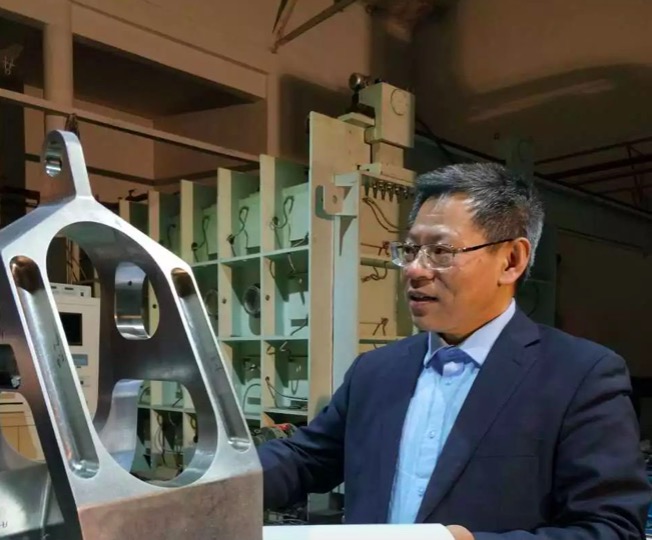
Q: For 3D printing, people seem to be willing to describe it in a vivid way. Some people say it is like spring silkworm spinning, swallows build nests, and you say it is like growing saplings. I think that a person can get along with something for a long time, and it will form a special relationship with it. Can you describe the special relationship between you and 3D printing?
A: I studied casting when I was in college. The basic theory of casting is metal melting and solidification and crystallization. In the past, furnaces were used for smelting, and now high-energy heat sources such as lasers, electron beams, and plasma beams are used for melting. In the past, a large furnace alloy was smelted, a few tons, tens of tons, but now it is a small molten pool, a few grams or tens of grams. In the past, everyone was reluctant to do casting, because it was dirty and hot, so after finishing my undergraduate course, I don't want to do casting anymore, so go for metal laser 3D printing. But then I discovered that it is essentially the smelting and solidification of metals, or 'casting'. Perhaps this is the so-called fate!
Q: There are tens of millions of roads in life. You have chosen this road of metal 3D printing. So what do you think, did you choose history, or did history choose you?
A: I think one aspect is related to my own experience. The major you study, your mentor, your team, in fact, many people will affect your life, affect you and decide what you do in the future. On the other hand, it also has a lot to do with the background of the society in which you grew up. We are in the historical process of the country from relatively backward to catching up, and the fast-growing country needs some major breakthroughs in equipment manufacturing technology. Through 3D printing technology, it not only solves the scientific frontier problems, but also realizes the country's major equipment manufacturing needs. We often talk about overtaking in corners now, which means we are not following you on the traditional route. We now have a new way to overtake and go ahead of you at once. I believe that the destiny of a person must be linked to the destiny of the country. 20 years earlier, I may not have the conditions to do metal 3D printing. 20 years later, I may still not have the opportunity to do this. .
Q: Personal ambition can be connected with the development of the country and the rejuvenation of the nation, which is really a lucky thing. The last thing I want to ask is that 3D printing is a new thing. Some people say that it may replace traditional manufacturing technology in the future. What do you think about this?
A: 3D printing technology is actually not mysterious. It is a new technology that has emerged with the advancement of human technology. To put it simply, it is to turn complex three-dimensional components into simple two-dimensional superimposed manufacturing. A three-dimensional part, no matter how complicated it is, if you cut it into countless two-dimensional slices, then each piece is a flat figure. A three-dimensional part is formed by superimposing countless plane graphics, which is equivalent to stacking one piece of paper on top of another and bonding it into a three-dimensional complex part.
3D printing technology has been produced since the 1980s, and it has been more than 30 years now. The total output value of the world may be less than 10 billion US dollars, that is to say, its current market value is not great. However, because its manufacturing method has been completely changed, it is automatically controlled by a computer, which represents the future development direction of intelligent manufacturing technology, so its future is very broad.
But this does not mean that 3D printing can replace traditional manufacturing technology. Just like when we build an airplane, we must use a variety of manufacturing technologies, and 3D printing is just one of them. It should be a complementary relationship with traditional manufacturing technology. If I make a small metal part with a simple structure, the traditional method may be cheaper, faster, and the performance is very good, while using 3D printing, it may be slower, the cost is high, and there is no advantage. However, if manufacturing large-scale complex, high-performance, critical metal parts of major equipment, 3D printing technology has unparalleled transformative advantages in traditional manufacturing technology in terms of manufacturing cycle, product performance, and manufacturing cost.
So I hope that while paying attention to the concept of 3D printing technology itself, people can concentrate more on in-depth research and solve more key scientific and technical fundamental issues that affect the potential of 3D printing.